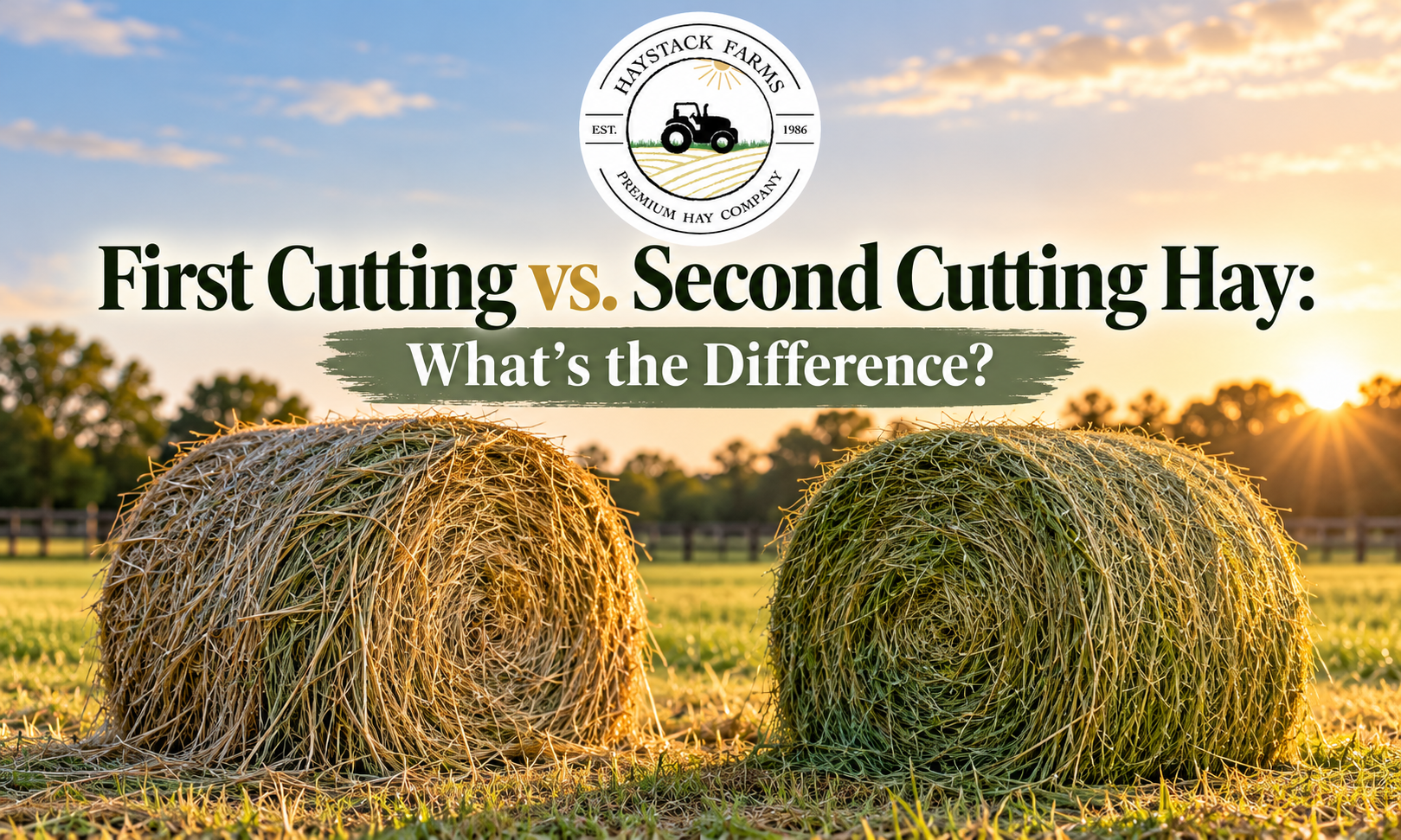
When shopping for hay for your horses, cattle, goats, or other livestock, you’ve probably heard the terms first cutting and second cutting. While both can provide excellent nutrition, there are some important differences in texture, nutritional content, appearance, and suitability for different animals.
Understanding these differences can help you make better feeding decisions, reduce waste, and ensure your animals receive the nutrition they need.
At Haystack Farms, we understand that quality hay plays an essential role in keeping livestock healthy and well-fed. Whether you’re purchasing hay for a single horse or managing a large livestock operation, knowing what separates first cutting from second cutting can help you choose the right product.
What Does First Cutting Hay Mean?
First cutting hay refers to the first harvest of a hay field during the growing season. Depending on the type of grass, weather conditions, and geographical location, this harvest generally occurs after the forage has experienced its initial period of seasonal growth.
In Florida and other warm-weather regions, the timing of the first cutting can vary significantly depending on rainfall, temperature, and the specific hay variety being grown.
First cutting hay often has several recognizable characteristics:
- Longer, more mature stems
- A coarser texture compared to later cuttings
- Potentially higher fiber content
- More seed heads, depending on harvest maturity
- Variable leaf content and nutritional value
Because the grass has had more time to grow before harvesting, first cutting hay can contain a greater proportion of stems, particularly when the crop is harvested at a mature stage.
However, first cutting hay isn’t automatically lower quality. When harvested at the proper stage of growth and stored correctly, it can provide excellent forage for horses, cattle, and other livestock.
The key is understanding how its characteristics match your animals’ nutritional requirements.
What Is Second Cutting Hay?
Second cutting hay comes from the regrowth of a field after its first harvest. Once the initial cutting has been completed, the grass begins growing again, allowing farmers to harvest another crop later in the season.
Because this growth occurs under different environmental conditions and often over a shorter period, second cutting hay may have a different appearance and nutritional profile.
Common characteristics of second cutting hay include:
- Softer, more flexible stems
- A higher leaf-to-stem ratio in some forage varieties
- A finer overall texture
- Potentially greater digestibility
- Different protein and energy concentrations
Second cutting hay is often popular among horse owners because animals may find its softer texture appealing.
However, the nutritional advantages of second cutting hay depend heavily on the type of forage, growing conditions, fertilization, and stage of maturity when harvested.
A properly managed first cutting can be more nutritious than a late-harvested second cutting. The cutting number alone doesn’t determine hay quality.
First Cutting vs. Second Cutting Hay: Key Differences
Although both harvests come from the same field, their characteristics can differ.
1. Texture and Stem Thickness
One of the most noticeable differences between first and second cutting hay is texture.
First cutting hay is often coarser because the plants may have developed thicker stems during their initial growth period.
Second cutting hay frequently has softer stems and a finer texture, particularly when harvested while the plants are relatively young.
Some horses prefer softer hay, while others readily consume coarser varieties.
However, texture is influenced by forage species and maturity, not simply whether the hay is first or second cutting.
2. Fiber Content
Fiber is an essential component of livestock diets, particularly for horses and other grazing animals.
First cutting hay may contain more structural fiber when harvested at a mature stage. This can make it useful for animals that need substantial forage without excessive dietary energy.
Second cutting hay may contain less mature fiber and be more digestible when harvested earlier in its growth cycle.
It’s important to distinguish between total fiber and fiber digestibility. Animals need adequate forage fiber, but overly mature hay may provide less usable energy and nutrients.
3. Protein and Nutritional Value
Many buyers assume second cutting hay always contains more protein than first cutting hay.
While this can sometimes be true, it isn’t a universal rule.
Protein levels depend on several factors, including:
- Grass or legume variety
- Soil fertility
- Fertilization practices
- Rainfall and temperature
- Plant maturity at harvest
- Harvesting and storage conditions
For example, a young, well-fertilized first cutting of Bermuda grass may have more protein than an older second cutting from a poorly managed field.
A forage analysis is the most reliable way to compare the nutritional content of different hay batches.
4. Appearance and Color
First cutting hay may appear slightly coarser and contain more visible seed heads.
Second cutting hay often looks leafier and more uniform, although this varies by forage type.
Color can provide clues about how hay was harvested and stored, but it doesn’t tell the entire story.
Bright green hay may indicate good preservation of plant pigments, while some naturally sun-bleached hay can still provide useful nutrition.
When inspecting hay, pay attention to its smell, moisture, cleanliness, and overall condition rather than judging quality by color alone.
Is First Cutting or Second Cutting Hay Better for Horses?
For horse owners, choosing between first and second cutting hay depends on the horse’s age, activity level, body condition, and nutritional requirements.
There is no single cutting that is best for every horse.
First Cutting Hay for Horses
First cutting hay can be an excellent option for many adult horses, especially when it provides adequate nutrients without excessive calories.
Some mature first cutting hay may be appropriate for easy keepers, which are horses that maintain their weight easily.
However, mature hay can sometimes be less digestible, so it is important to ensure the horse receives sufficient usable nutrition.
For horses with dental problems or difficulty chewing, coarse, stemmy hay may be less suitable.
Second Cutting Hay for Horses
Second cutting hay is often preferred for its softer texture and potential palatability.
Depending on its nutritional analysis, it may be suitable for:
- Horses in regular training
- Growing horses
- Broodmares with increased nutritional needs
- Horses that require more digestible forage
- Older horses that have difficulty chewing coarse hay
However, second cutting hay isn’t automatically higher in calories or protein.
For horses with metabolic conditions, insulin dysregulation, or a history of laminitis, selecting hay based on tested sugar and starch content is particularly important.
The best choice is hay that matches the individual horse’s nutritional needs, regardless of cutting number.
Which Cutting Is Better for Cattle, Goats, and Other Livestock?
Different livestock species have different nutritional requirements, and those requirements change throughout their lives.
Cattle
Beef cattle can utilize a wide range of forage qualities, depending on their production stage.
Mature, non-lactating beef cattle may do well on moderate-quality hay, while growing calves and lactating cows generally require more nutrients.
First cutting hay may be suitable for maintenance diets when its nutritional content meets the animals’ needs.
More digestible hay from a later cutting may be useful for animals with higher nutritional demands.
Goats
Goats can be selective eaters and often prefer leafy, palatable forage.
Second cutting hay may appeal to goats because of its softer texture and potentially greater leaf content.
However, first cutting hay can also be an excellent choice when properly harvested.
Pregnant, lactating, and growing goats may require more protein and energy than mature goats at maintenance.
Sheep
Sheep require clean, nutritious forage appropriate for their age and production stage.
Both first and second cutting hay can work well, provided the hay is free of mold and excessive dust.
As with other livestock, nutritional testing helps determine whether additional feed or minerals are necessary.
How Does Florida’s Climate Affect Hay Cuttings?
Florida’s warm temperatures and long growing season create opportunities for multiple hay harvests throughout the year.
However, producing quality hay in Florida also presents challenges.
Rainfall, humidity, soil conditions, and seasonal weather patterns all influence forage growth and harvesting schedules.
During periods of frequent rainfall, farmers may have difficulty finding enough consecutive dry days to cut, cure, and bale hay properly.
Excessive moisture during baling can increase the risk of mold growth and heating during storage.
On the other hand, warm temperatures and adequate moisture can support rapid grass regrowth between cuttings.
For Bermuda grass varieties such as Coastal, Jiggs, and Tifton 85, harvest timing plays a major role in determining forage quality.
These grasses can produce multiple cuttings during favorable growing conditions, but their nutritional value changes as they mature.
Rather than assuming a particular cutting is superior, buyers should consider the quality of each individual harvest.
Does Second Cutting Hay Cost More?
Second cutting hay sometimes commands a higher price, particularly in markets where buyers prefer softer, leafier forage.
However, pricing depends on several factors beyond cutting number.
These include local supply and demand, hay variety, bale size, weather conditions, transportation expenses, and overall quality.
A second cutting isn’t necessarily worth paying more for simply because it is labeled as such.
For example, a well-preserved first cutting with an appropriate nutritional profile may be a better value than a poorly stored second cutting.
When purchasing hay in larger quantities, consistent quality and reliable availability are often more important than the cutting number alone.
How to Choose Quality Hay Regardless of Cutting
Whether you’re buying first cutting, second cutting, or a later harvest, evaluating hay quality should always be your priority.
Here are several things to consider before purchasing.
Check the smell. Good hay should have a pleasant, fresh forage smell. Musty or moldy odors can indicate moisture problems.
Look for mold and excessive dust. Hay should be clean and free of visible mold. Excessive dust may cause respiratory irritation, particularly in horses.
Inspect the stems and leaves. Leafiness and stem maturity can provide clues about palatability and nutritional quality.
Ask about storage conditions. Hay that has been protected from rain and excessive moisture is generally better preserved.
Consider forage testing. Laboratory analysis can reveal crude protein, fiber, digestible energy, and other important nutritional measurements.
Choose the right forage variety. Different grasses and legumes have different nutritional characteristics, regardless of when they are harvested.
A dependable hay supplier should be able to help you understand the products available and choose forage suited to your livestock.
Frequently Asked Questions About First and Second Cutting Hay
Is second cutting hay always better than first cutting?
No. Second cutting hay is often softer and leafier, but quality depends on the forage variety, harvest maturity, growing conditions, and storage. A properly harvested first cutting can be just as suitable, or even better, for certain animals.
Is first cutting hay too coarse for horses?
Not necessarily. Many horses consume first cutting hay without difficulty. However, extremely coarse or mature hay may be less suitable for horses with dental issues or increased nutritional needs.
Does second cutting hay contain more sugar?
Not always. Sugar content varies with plant species, weather, growth conditions, and harvest timing. Horse owners managing animals with metabolic concerns should request forage testing rather than relying on cutting number.
Can you mix first and second cutting hay?
Yes. Mixing different hay batches can sometimes help provide a balanced forage supply, provided both are clean and nutritionally appropriate. Dietary changes should be introduced gradually to reduce digestive upset.
Which cutting is best for winter feeding?
Either cutting can work well for winter feeding. The best choice depends on the animals’ nutritional requirements, body condition, and the hay’s tested nutrient content.
Find Quality Hay at Haystack Farms
When comparing first cutting vs. second cutting hay, the most important thing to remember is that hay quality matters more than cutting number.
First cutting hay may offer a coarser texture and more mature fiber, while second cutting hay may be softer, leafier, and more digestible. However, these differences aren’t guaranteed, and both can provide excellent forage when properly grown, harvested, and stored.
At Haystack Farms, we take pride in providing quality hay for horses, cattle, goats, and other livestock. With hay varieties including Coastal Bermuda, Jiggs, Tifton 85, and perennial peanut, we help customers find forage that fits their animals’ needs.
Whether you’re stocking up for the season or purchasing hay for your everyday feeding routine, choosing a reliable supplier makes a difference.