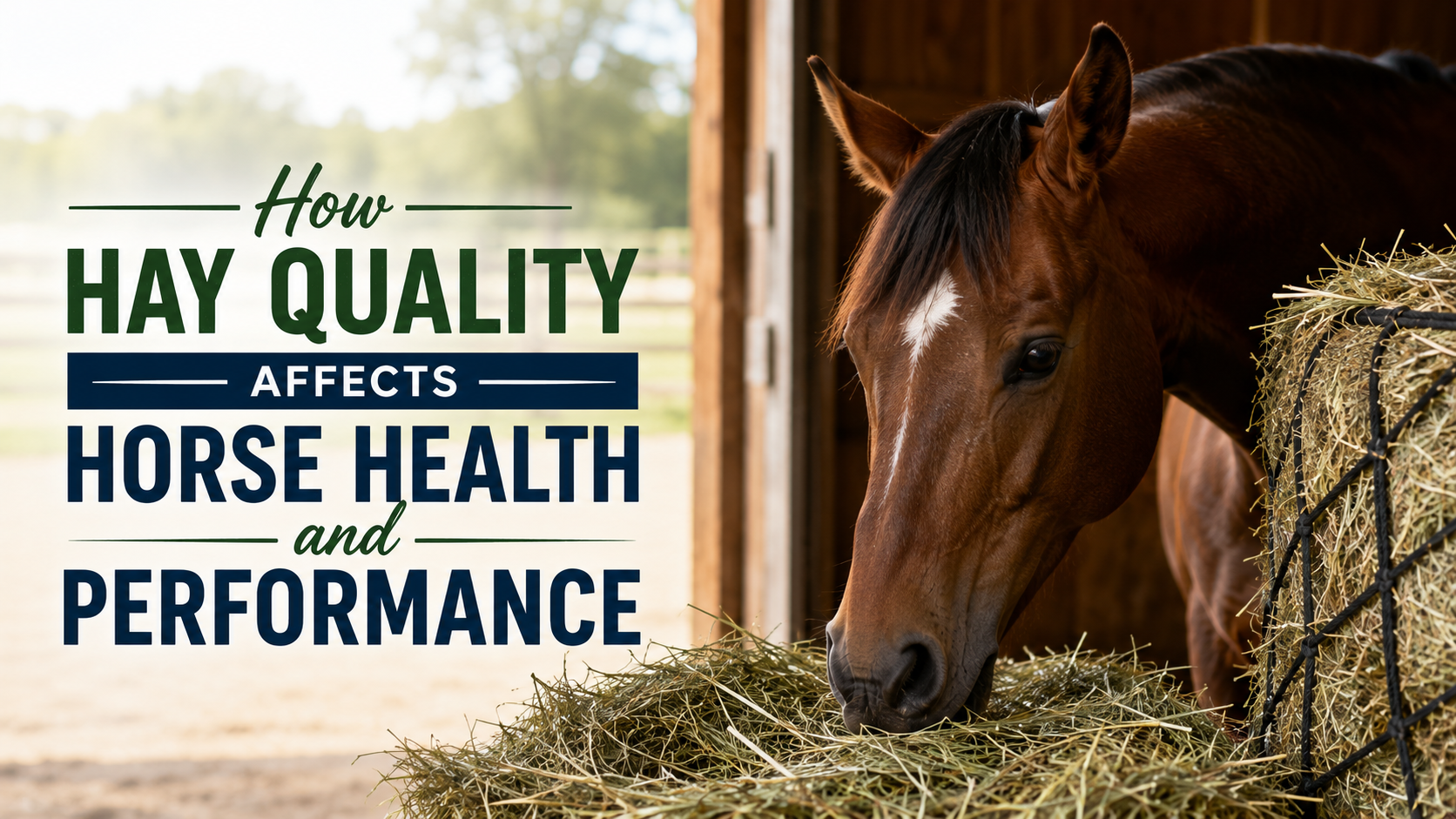
When it comes to feeding horses, hay is often the foundation of their diet. Whether you own a retired pasture companion, a growing youngster, or a high-performance athlete, the quality of the hay you provide plays a major role in overall health, body condition, digestion, and performance.
Many horse owners focus on grain, supplements, and feed additives, but quality forage should always come first. Understanding how hay quality impacts your horse can help you make better feeding decisions and support long-term wellness.
Why Hay Matters So Much
Horses are natural grazers designed to consume forage throughout the day. Their digestive systems rely on a steady intake of fiber to function properly, making hay one of the most important components of a balanced diet.
Good-quality hay provides:
- Essential fiber for digestive health
- Calories for energy
- Protein for muscle maintenance and development
- Vitamins and minerals
- Mental stimulation through natural chewing behavior
When hay quality suffers, your horse may not receive the nutrition needed to thrive.
Body Condition and Weight Maintenance
One of the first areas affected by hay quality is body condition. Horses consuming nutrient-rich hay often maintain healthy weight more easily than those eating poor-quality forage.
Low-quality hay may contain excessive stem material, lower digestibility, and reduced nutritional value. As a result, horses may struggle to maintain weight, especially during periods of increased activity, cold weather, or growth.
Premium hay can help horses maintain appropriate body condition while reducing the need for excessive grain supplementation.
Digestive Health Starts with Quality Forage
The horse’s digestive system depends on consistent fiber intake. Poor-quality hay can contribute to digestive challenges, including:
- Reduced nutrient absorption
- Increased risk of impaction
- Digestive upset
- Changes in manure quality
Clean, properly cured hay supports healthy gut function and promotes efficient digestion. Since a significant portion of a horse’s digestive process occurs in the hindgut, providing quality forage is essential for maintaining digestive balance.
Performance Horses Require Better Nutrition
Athletic horses place greater demands on their bodies than horses used primarily for pleasure riding or retirement.
Performance horses often benefit from hay that provides:
- Higher digestible energy
- Better protein content
- Consistent nutrient levels
- Improved forage quality
Whether competing in barrel racing, dressage, eventing, ranch work, or other disciplines, horses fueled by quality forage often have better stamina, recovery, and overall condition.
Hay Quality Affects Coat and Hoof Health
A horse’s appearance often reflects the quality of its nutrition. Horses receiving high-quality forage typically exhibit:
- Shinier coats
- Improved hoof quality
- Better muscle tone
- Healthier skin condition
While supplements can help address deficiencies, quality hay provides the nutritional foundation that supports overall health from the inside out.
The Risks of Poor-Quality Hay
Not all hay is created equal. Poor-quality hay can negatively impact horse health and potentially lead to costly veterinary issues.
Horse owners should avoid hay that contains:
- Mold
- Excessive dust
- Weeds
- Foreign objects
- Signs of moisture damage
- Musty odors
Feeding contaminated or poorly stored hay may increase the risk of respiratory irritation, digestive issues, and reduced feed intake.
What to Look for in Quality Hay
When evaluating hay, consider several important factors.
Color
Quality hay is often green to bright green in appearance. While color alone doesn’t determine nutritional value, faded brown hay may indicate age, weather damage, or nutrient loss.
Leaf Content
Leaves contain a significant portion of a hay’s nutritional value. Hay with abundant leaves and fewer coarse stems is generally more desirable.
Smell
Fresh hay should have a pleasant, sweet smell. Musty or moldy odors can indicate improper storage or moisture issues.
Cleanliness
Look for hay that is free from weeds, excessive dust, mold, and foreign materials.
Consistency
Consistent hay quality from bale to bale helps maintain a more stable feeding program and supports overall horse health.
Choosing the Right Hay for Your Horse
Different horses have different nutritional requirements. Factors such as age, workload, metabolism, and overall health all influence which type of hay may be most appropriate.
Popular options include:
- Coastal Bermudagrass Hay
- Jiggs Bermudagrass Hay
- Tifton 85 Hay
- Perennial Peanut Hay
Each offers unique characteristics and nutritional profiles that may benefit certain horses and management programs.
Invest in Quality Forage
Hay is much more than filler in a horse’s diet. It serves as the nutritional foundation that supports digestion, body condition, performance, and overall health.
By investing in high-quality forage, horse owners can help their horses maintain healthy weight, perform at their best, and enjoy long-term wellness. Choosing clean, properly harvested, and properly stored hay is one of the most important decisions you can make for your horse’s care.
Quality Hay From Haystack Farms
At Haystack Farms, we take pride in producing premium-quality hay for horse owners throughout Florida. From Coastal and Jiggs to Tifton 85 and Perennial Peanut Hay, our commitment to quality helps ensure your horses receive the nutrition they need to thrive.
Contact Haystack Farms today to learn more about our available hay products and find the right forage solution for your horses.