When buying hay in North Florida, one of the first decisions you’ll face is whether square bales or round bales make the most sense for your animals, storage space, and budget. While both options can be high quality, they serve very different needs.
At Haystack Farms, we help customers every day choose the right bale type for horses, cattle, goats, and other livestock—so here’s a clear breakdown to help you decide.
What’s the Difference Between Square and Round Bales?
Square Bales
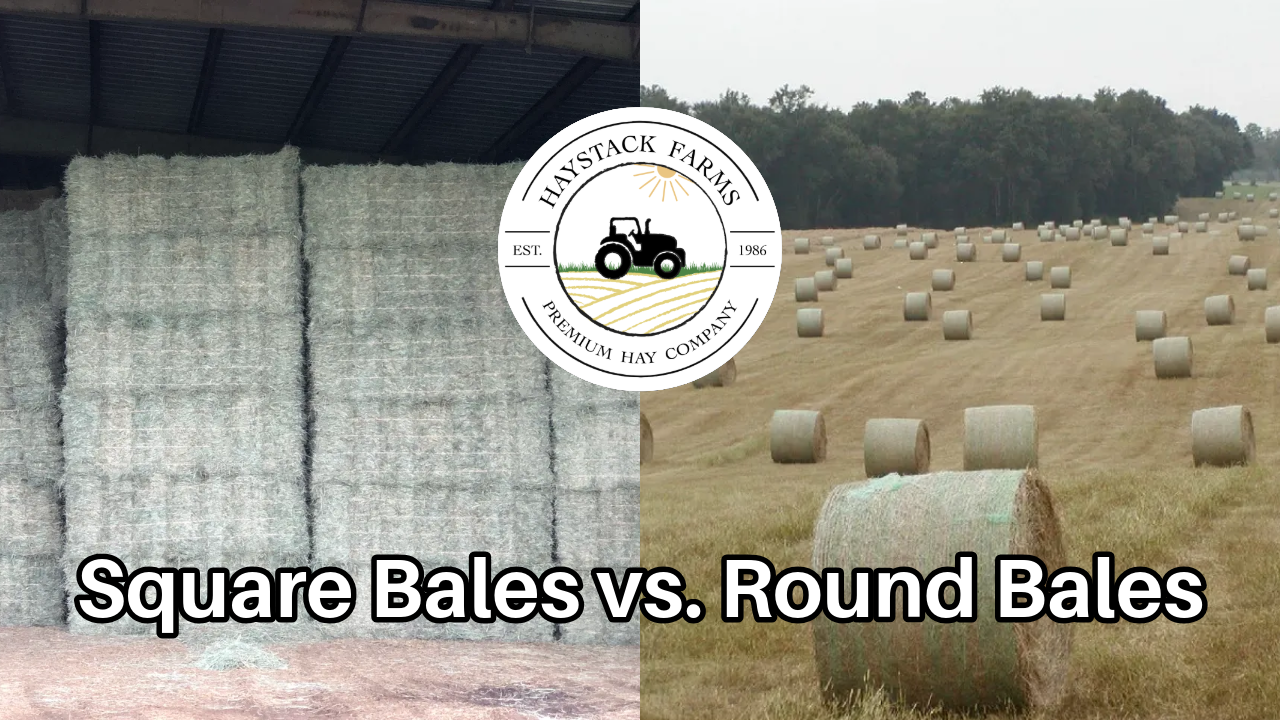
Square bales are typically small, rectangular bales that can be moved by hand. They’re the most common choice for horse owners and smaller farms.
Round Bales
Round bales are large, heavy bales designed for bulk feeding. They’re commonly used for cattle operations and larger herds.
Square Bales: Pros and Cons
Pros of Square Bales
-
Easy to handle without heavy equipment
-
Better portion control for feeding
-
Ideal for horses and smaller livestock
-
Easier to inspect for mold or moisture
-
Convenient for barn or covered storage
Cons of Square Bales
-
Higher cost per bale compared to round bales
-
More labor-intensive for large herds
-
Requires more frequent handling and feeding
Square bales are often the preferred option for horse owners in North Florida because they allow better control over daily feed amounts and reduce waste.
Round Bales: Pros and Cons
Pros of Round Bales
-
Lower cost per pound of hay
-
Efficient for feeding multiple animals
-
Fewer feeding sessions required
-
Great for cattle and large herds
Cons of Round Bales
-
Requires tractor or equipment to move
-
Higher risk of waste if not fed properly
-
Can mold quickly if stored incorrectly in Florida’s humidity
-
Less precise portion control
Round bales work best when paired with proper feeders and covered storage, especially in North Florida’s wet climate.
Cost Comparison: Square vs. Round Bales in North Florida
While prices fluctuate with weather and harvest conditions, here’s a general comparison:
-
Square bales cost more per bale but less hay is wasted
-
Round bales cost less per pound but can lose value quickly if exposed to rain or humidity
For many customers, the “cheapest” option isn’t always the most cost-effective once waste and spoilage are factored in.
Which Bale Type Is Right for You?
Square Bales Are Best If You:
-
Own horses, goats, or smaller livestock
-
Feed daily and want precise portions
-
Don’t have heavy equipment
-
Store hay in a barn or enclosed space
Round Bales Are Best If You:
-
Feed cattle or larger herds
-
Have tractors or bale spears
-
Use round bale feeders
-
Buy hay in bulk and plan ahead
Our Recommendation at Haystack Farms
There’s no one-size-fits-all answer. The best bale choice depends on:
-
Your animals
-
Your feeding routine
-
Your storage setup
-
Your long-term hay budget
At Haystack Farms, we help North Florida customers choose the right hay, the right bale size, and the right quantity—so you get consistent quality without unnecessary waste.
If you’re unsure which option makes the most sense, just ask. We’re always happy to help you plan ahead 🌾